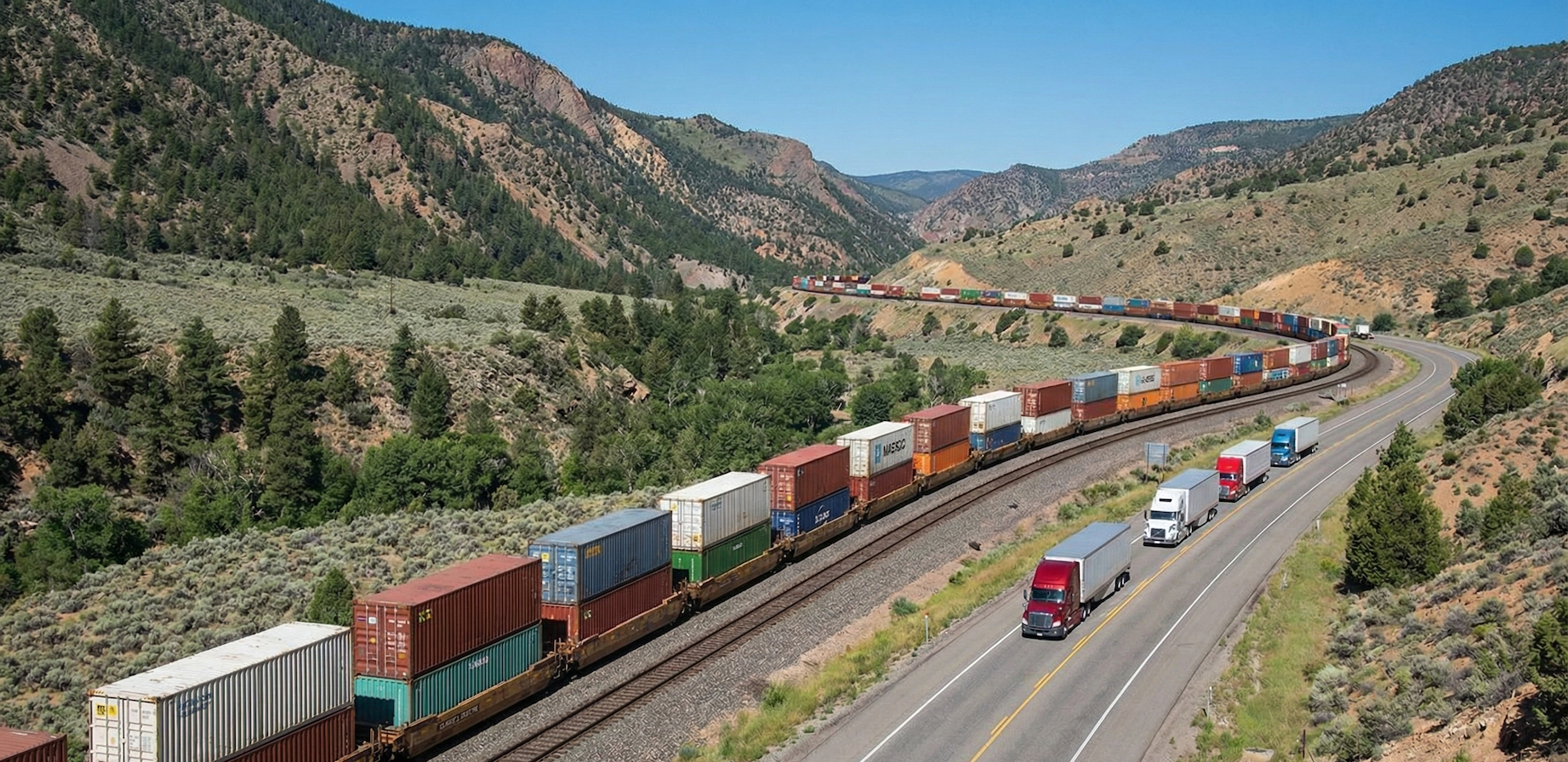
Demand for efficient and scalable shipping solutions continues to rise, and more companies are turning to intermodal rail as a reliable way to strengthen their supply chains. Intermodal transportation, which combines both truck and rail freight, has become a preferred option for long-distance shipping because it delivers consistency, capacity, and sustainability.
As a general rule, any full truckload moving 500 miles or more is an ideal candidate for highway-to-rail conversion. Instead of replacing trucks, rail works alongside them, creating a true rail + road partnership that uses each mode where it performs best.
I. Introduction to Intermodal Rail
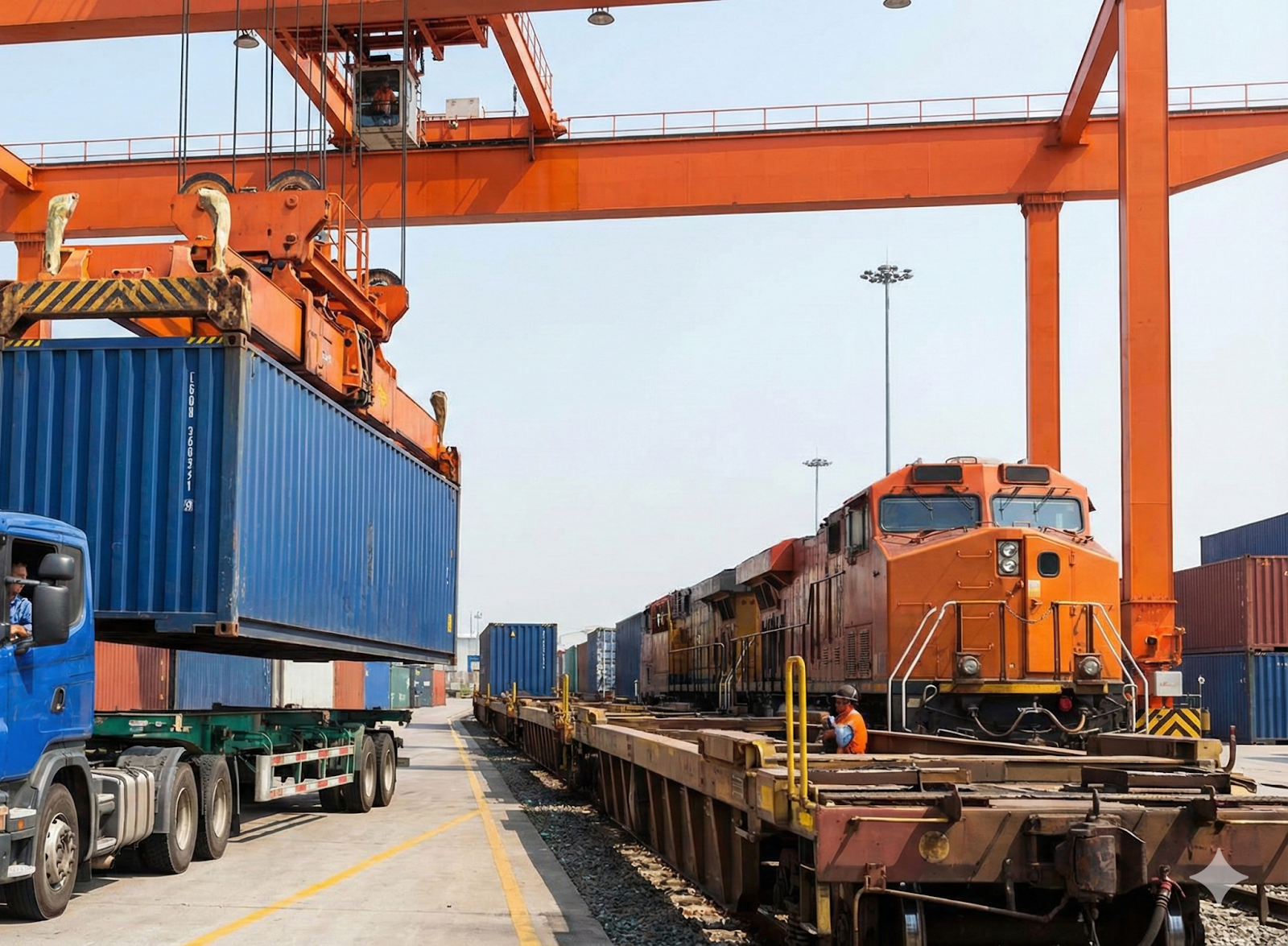
Intermodal rail moves freight in a single container using both truck and train without handling the cargo during transfers. It provides a modern solution for shippers who need reliable long-haul movement without the rising costs and capacity challenges of over-the-road trucking. By using rail for the line haul and trucks for pickup and delivery, supply chains remain efficient and flexible. As demand for scalable transportation grows, more companies are integrating intermodal rail into their operations.
II. How Intermodal Rail Fits Into Supply Chains
In a typical intermodal supply chain, freight follows a simple and seamless journey:
The shipment starts with a local truck pickup, then moves to a rail terminal where the rail line carries it across long distances, and another truck completes the final delivery. This creates a smooth, reliable intermodal trip from the shipper to the consignee. Intermodal is widely used for goods such as electronics, auto parts, clothing, consumer goods, household items, and many other products that benefit from consistent long-haul transportation.
III. Three Major Advantages of Intermodal Rail
1. Scalable Capacity
Intermodal rail provides scalable freight solutions that can absorb large volumes efficiently. Railroads move more than 17 million intermodal loads every year, and a single intermodal train can offer the same capacity as 280 trucks. This level of rail capacity becomes especially valuable during peak seasons and supply chain disruptions, when truckload availability is often unpredictable.
2. Cost Efficiency
Shippers turn to intermodal to reduce freight costs and create a more efficient supply chain. Rail transportation typically offers significant savings compared to long-haul trucking, helping companies offset volatile fuel prices, tight truck capacity, and rising transport expenses.
CSX has found that 96% of shippers have freight that qualifies for intermodal conversion. When freight is not optimized for rail, companies often face higher transport costs, unstable capacity, weaker service levels, and missed sales opportunities.
3. Environmentally Responsible
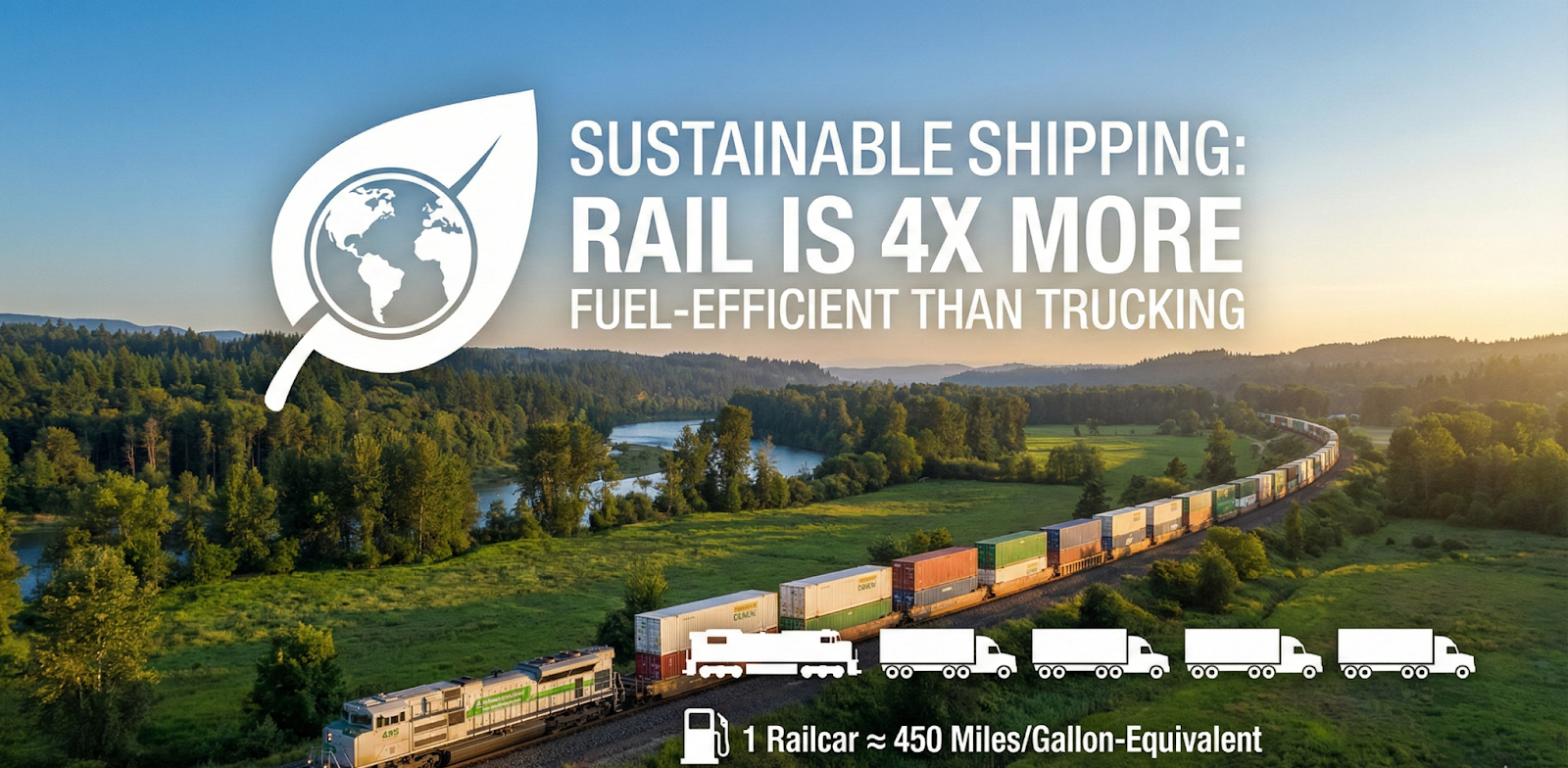
Intermodal rail is also one of the most sustainable freight shipping options available. Rail is four times more fuel-efficient than trucking, and one railcar can move freight nearly 450 miles per gallon-equivalent. If just 10% of long-haul highway freight shifted to rail, the U.S. could save 12 billion gallons of fuel annually. Because rail produces fewer greenhouse gas emissions, it aligns strongly with ESG goals and modern sustainability standards.
IV. Highway-to-Rail (H2R) Optimization
Tools like the CSXT Intermodal Highway-to-Rail Optimizer help shippers understand exactly which lanes are best suited for intermodal. The tool supports shippers through three key steps: identifying freight eligible for conversion, improving access to scalable rail capacity, and reducing both cost and carbon output through better intermodal optimization. Data shows that 96% of shippers have unoptimized freight that could become more efficient through highway-to-rail conversion.
V. Why Choose Intermodal Now?
Today, intermodal rail is a strong opportunity for companies seeking cost reduction, stable capacity, ESG performance, and a more diversified freight mix. It also provides major advantages during peak seasons, winter storms, and periods of capacity shortages, giving shippers a more resilient and predictable supply chain.

Intermodal is no longer an alternative mode, it is a strategic advantage. The combination of rail freight solutions and trucking creates a more resilient, cost-effective, and sustainable supply chain. With lower costs, greater capacity, and meaningful environmental benefits, intermodal rail is becoming essential for companies preparing for the future of logistics.
Looking to explore intermodal shipping?
Our team can identify your strongest lanes, compare rail vs truck shipping, and help you transition smoothly into highway-to-rail conversion for cost and carbon savings. Book a Call with our team of Intermodal experts or Email Us to inquire today!